


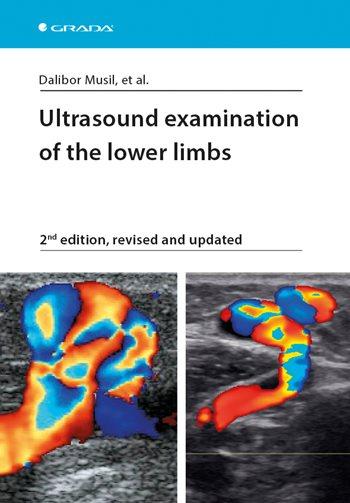
This monograph focuses on the clinical use of ultrasound in phlebology. The introduction covers the technical aspects from basic physical principles of the ultrasound signal formation and processing, principles of rheology and the Doppler effect through various ultrasound modalities to practical instructions for setting the ultrasound machine for examination of various areas of the venous system.
The next part provides detailed description of the venous anatomy of the lower extremities as a reliable guide for navigating the sometimes variable vein morphology. The core of the book is a description of the principal nosological units in phlebology and methods for their sonographic diagnosis. In the first place is chronic venous disease, along with superficial and deep vein thrombosis, the post-thrombotic syndrome, congenital vascular malformations and variations, and venous aneurysms. The core of the book is the description of the main nosological entities in physiology and the methods for sonographic diagnostics.An increasingly important overlap of ultrasonography from diagnostics to therapy is outlined in chapters on the use of sonography in local venous thrombolysis and surgical treatment of chronic venous disease.
The book concludes with several case reports, a practical and a synthesis of all the other chapters, a clinical outllook and a message for everyday practice. Essentially, they are an extract of why the book was created. Increasingly important is the extension of ultrasound diagnostics into therapy, which is outlined in the chapters on the use of sonography for local venous thrombolysis and surgical treatment of chronic venous diseases.
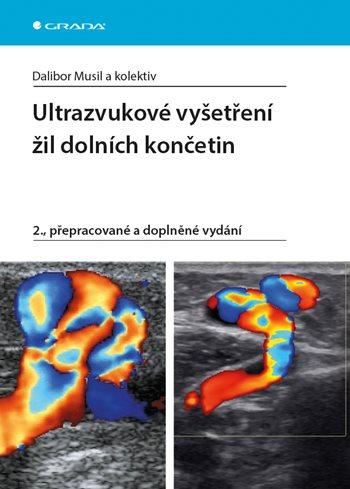
Hlavním přínosem této knihy jsou teoretické základy ultrazvukového vyšetřování ve flebologii včetně fyzikálních principů ultrazvuku, terminologie, anatomie a etiopatogeneze žilních onemocnění, spojené s názornými obrázky a kazuistikami. Celobarevná publikace je bohatě obrazově dokumentována – najdete v ní více než 130 obrázků, dále schémata a tabulky.
Didakticky skvělá publikace shrnuje současný stav poznání v této oblasti a zároveň slouží
jako moderní učebnice i praktická příručka. Své čtenáře najde nejen mezi specialisty používajícími ultrazvuk v diagnostice žilních onemocnění, ale také mezi lékaři, kteří na toto vyšetření své pacienty odesílají.
Cílovou skupinu tak tvoří zejména odborníci oddělení zobrazovacích metod, internisté, kardiologové, angiologové, flebologové, chirurgové, cévní chirurgové, dermatologové a praktičtí lékaři. Přestože je publikace svým tématem spíše postgraduálního charakteru, má své nepochybné místo i v pregraduální výuce.

Ojedinělá publikace podrobně a systematicky pojednává o onemocnění žil v různých částech lidského těla. Zevrubný teoretický pohled na etiopatogenezi, kliniku, diagnostiku a léčbu je v každé kapitole doplněn a dokreslen bohatou, názornou obrazovou dokumentací a četnými kazuistikami. Je popsáno postižení žilního systému hlavy, krku, horních a dolních končetin, dutiny břišní a pánve i hemoroidy. Nechybí rozsáhlá, jindy poněkud opomíjená, kapitola věnována žilním malformacím a hemangiomům.
